Showing posts with label 3D. Show all posts
Showing posts with label 3D. Show all posts
Motion Capture is the process of recording movement and translating that movement on to a digital model Usually used in military, entertainment, sports, and medical applications, and for validation of computer vision and robotics and mostly in filmmaking.

You need Supercomputers For Rendering
Thousands of processor to run
Hundred of Visual experts Required
petabyte of Storage Required
In films Camera movements can also be motion captured so that a virtual camera in the scene will pan, tilt, or dolly around the stage driven by a camera operator while the actor is performing, and the motion capture system can capture the camera and props as well as the actor's performance.A computer processes the data and displays the movements of the actor, providing the desired camera positions in terms of objects in the set. Retroactively obtaining camera movement data from the captured footage is known as match moving or camera tracking.
3D Motion capture provide following advantages:
 |
| Tracking Cameras |
More rapid, even real time results can be obtained. In entertainment applications this can reduce the costs of keyframe-based animation. For example: Hand Over.
The amount of work does not vary with the complexity or length of the performance to the same degree as when using traditional techniques. This allows many tests to be done with different styles or deliveries.
Complex movement and realistic physical interactions such as secondary motions, weight and exchange of forces can be easily recreated in a physically accurate manner.
The amount of animation data that can be produced within a given time is extremely large when compared to traditional animation techniques. This contributes to both cost effectiveness and meeting production deadlines.
Potential for free software and third party solutions reducing its costs.
 |
| Avatar |
Movie avatar is best example of Motion Capture and Visual effects.The lead visual effects company was Weta Digital in Wellington, New Zealand, at one point employing 900 people to work on the film. Because of the huge amount of data which needed to be stored, cataloged and available for everybody involved, even on the other side of the world, a new cloud computing and Digital Asset Management (DAM) system named Gaia was created by Microsoft especially for Avatar, which allowed the crews to keep track of and
coordinate all stages in the digital processing. To render Avatar, Weta used a 10,000 sq ft (930 m2) server farm making use of 4,000 Hewlett-Packard servers with 35,000 processor cores running Ubuntu Linux and the Grid Engine cluster manager.The render farm occupies the 193rd to 197th spots in the TOP500 list of the world's most powerful supercomputers. A new texturing and paint software system called Mari, was developed by The Foundry in cooperation with Weta.Creating the Na'vi characters and the virtual world of Pandora required over a petabyte of digital storage, and each minute of the final footage for Avatar occupies 17.28 gigabytes of storage. To help finish preparing the special effects sequences on time, a number of other companies were brought on board, including Industrial Light & Magic, which worked alongside Weta Digital to create the battle sequences. ILM was responsible for the visual effects for many of the film's specialized vehicles and devised a new way to make CGI explosions. Joe Letteri was the film's visual effects general supervisor.
 |
| For High Precision Motion Tracing |
At first glance, 3D animation movies seem a longshot to be created independently. With the complexity of animation, it seems a given that it should be created within the bounds of a 3D animation studio. If these studios take years to create a full-length feature, how about an independent filmmaker?
 |
Camera Tracking Architecture
From optical/inertial, to encoded systems, to motion capture stages, to GPS/IMU outdoor tracking, Previzion can handle nearly any form of tracking device
Optical/Inertial. For Ultimate Tracking Flexibility.
 |
The fusion of the Intersense IS1200 optical tracking camera and the Lightcraft Airtrack electronic gyro provides tracking for the broadest range of shots. From handheld and Steadicam, to dolly, jib, and Technocrane shots, this can handle nearly everything.
Using targets mounted overhead in the stage truss, a standard stage can be converted into a real time capable smart stage in a single day.
Recommended Softwares for motion capture effects are Adobe premiere pro, After effects, Sony vegas,Syntheye and many more.
Recommended Softwares for motion capture effects are Adobe premiere pro, After effects, Sony vegas,Syntheye and many more.
Courtesy wikipedia | digitalacting.com | youtube
Rendered Video
In this tutorial you will learn how to create, animate and render LED style eyes for characters like robots or even some products while creating presentations. In most of the cases character animation and especially facial animation is easier since there is actual geometry representing parts of the face, but how do you work with characters that have a different design or no mesh to manipulate for animation? Well in this tutorial you will

In this tutorial I look at a great way to practice timing and placement of keys.


 |
Final Effect |
All of the high-end 3d apps on the market, 3ds Max is by far one of the most powerful. It is, however, also one of the most complex and daunting 3d apps to learn. In this two part tutorial series, professional video game artist, Kaleb Aylsworth, will give you a detailed introduction to 3ds Max, as it pertains to polygonal modeling and the video game industry.
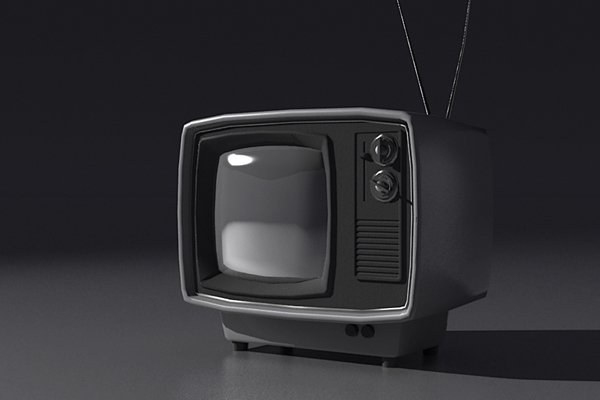
In this, the first part of the series,we will spend an hour and a half walking you through many key skills such as: navigation, changing views and shading modes, menus and tabs, and most importantly, the polygonal modeling tools. Then, in the second part, he will demonstrate how to apply the things that you have learned by using them to make a low-poly version of Guy van der Walt’s “Retro TV Set”.
 |
| 3D Max |
In addition to its modeling and animation tools, the latest version of 3ds Max also features shaders (such as ambient occlusion and subsurface scattering), dynamic simulation, particle systems, radiosity, normal map creation and rendering, global illumination, a customizable user interface, and its own scripting language
After Effects Camera Tracker and Match Mover
CAMERATRACKER for After Effects® allows you to pull 3D motion tracks and matchmoves without having to leave AE. It analyses the source sequence and extracts the original camera's lens and motion parameters, allowing you to composite 2D or 3D elements correctly with reference to the camera used to film the shot.
You can now match camera moves within Adobe® After Effects®' 2.5D environment, opening up new, robust options for the placement of composite elements, such as the creation of Fringe / Heroes style 'in scene' titles, insertion of animated design elements, match-moved virtual set extensions, motion-tracked projection mapping and much more .This 3d motion tracking technology was previously only available in NUKEX, the Foundry's high-end film compositing tool. You can now do all this in Adobe® After Effects® without exiting your application.
CAMERATRACKER: Motion Tracking in Action
In this sequence, Mark T. Aro of Hyperactive Studios demonstrates using CAMERATRACKER for Adobe® After Effects® to insert and mask graphical titling elements on a shot for Finding Hope Now.
 In 1838, Sir Charles Wheatstone first described the process of stereopsis: the process by which humans perceive three dimensions from two highly similar, overlaid images. Or, the process by which Avatar looks like a mind-blowingly immersive alien landscape instead of a bunch of brightly colored fuzz.
3D technology has come a long way since Wheatstone developed his stereoscope, then used to view static images and eventually pictures. Now we get to wear Wayfarer knock-offs and enjoy 3D films, television shows and video games.
For some people, seeing cool images might be enough. But others might be curious how Pandora was brought to life, or how TRON: Legacy zapped them into its glowing world. The answer is both reassuringly simple and inordinately complex, depending on who you ask and how you look at it.
Turns out that Disney loves the fishes because they’re going to be in 3D. Disney has announced that Pixar’s animated classic Finding Nemo will hit theaters this Fall for a limited, three-dimensional run. This isn’t the first time Disney has re-released 2D Pixar films in 3D. In the lead-up to Toy Story 3, the studio released Toy Storyand Toy Story 2 in a 3D double feature.
Finding Nemo 3D follows in the footsteps of Disney’s first 3D successes including The Lion King which earned $30 million when it was re-released in September and Beauty and the Beast which hit theaters on Jan. 13.


 Posts
Posts



